CAN Bus Decoder vs Wiring Harness: Head-to-Head for Android Radio Integration
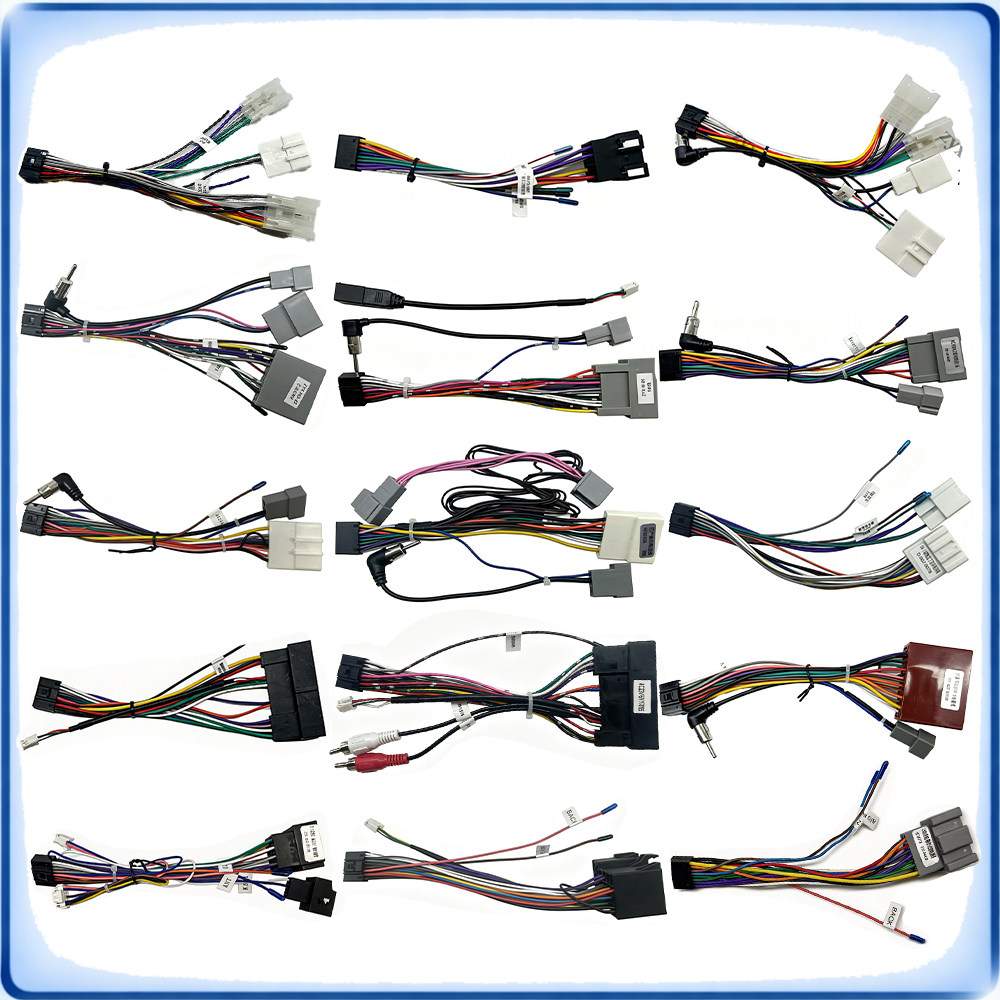
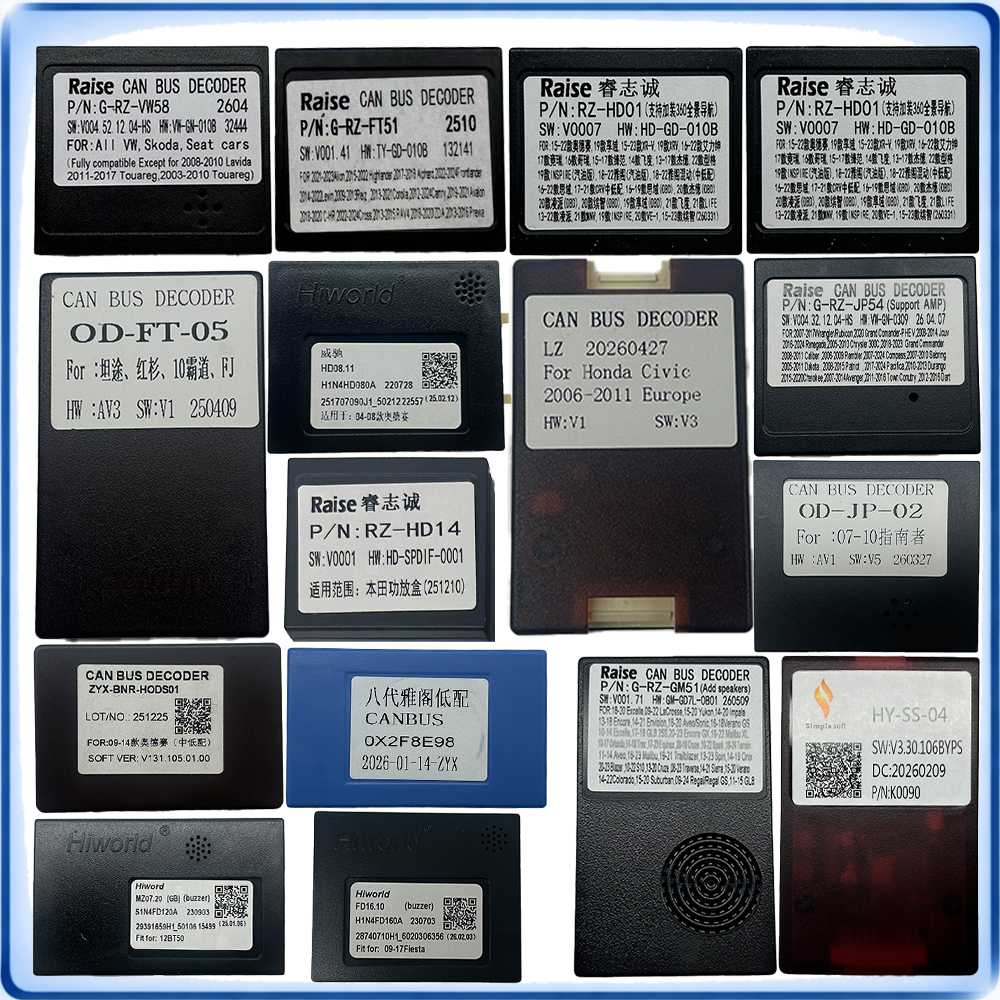
A car radio wiring harness and a CAN bus decoder do not compete for the same socket — they sit on two different layers of one Android radio retrofit. The ZYX-02 car radio wiring harness is the plug-and-play, model-specific adapter that joins the vehicle's OEM vehicle-side plug to an ISO 16-pin head unit connector, and it is designed for non-CAN bus vehicle models. The ZYX-03 CAN bus decoder module is added when factory CAN bus signals must be decoded so the aftermarket Android radio can keep OEM steering wheel controls, vehicle information display and the original chime. The practical rule is simple: confirm the electrical layer first, and add the decoder only when a factory CAN bus has to be translated.
The question behind “decoder vs harness”
Installers rarely ask this question before a job starts. It usually arrives halfway through one: the new head unit powers up but the steering wheel buttons are dead, or the dashboard lights up with warning codes, or the radio never powers on at all. Each of those outcomes points to a different layer of the connection, and each layer is served by a different part.
An Android head unit retrofit stacks three layers. The physical layer is the dashboard interface — the fascia kit that holds the screen in the original console opening. The electrical layer is the harness that carries 12V power, ground and speaker signals between the factory plug and the new radio. The data layer is the CAN bus path that carries button presses, climate information, illumination state and vehicle status messages. The ZYX-02 harness covers the electrical layer. The ZYX-03 decoder covers the data layer. They are matched to work together, not selected against each other.
That distinction matters most in a vehicle-specific Android car stereo fascia kit project, where the fascia is already fixed by the dashboard shape. Once the physical fit is settled, the remaining decision is purely about the connection: does this vehicle simply need an adapter between two plugs, or does it also need its network messages translated?
Problem definition: four symptoms, four different layers
Most retrofit failures that get blamed on “the kit” are traceable to one of four known causes. Separating them is the fastest way to decide whether a decoder belongs in the bill of materials at all.
- The head unit does not power on. Typical causes are a disconnected vehicle battery, poor contact at the power supply pins, a blown built-in fuse on the harness, or reversed polarity. The checks are: battery connection, re-seating the power connector, inspecting the harness fuse, and confirming power interface polarity.
- Steering wheel controls stop responding. Typical causes are a mismatched CAN bus decoder protocol, a loose steering control pin connection, or a decoder that was not programmed for the exact vehicle trim configuration. Resolution means matching the decoder to model, model year and trim, re-seating the CAN bus and steering control connectors, and reflashing the matching firmware where required.
- Dashboard fault codes appear. Typical causes are an incompatible CAN decoder protocol, a loose CAN bus interface connection, or a mismatched decoder firmware version. Resolution follows the same logic: confirm the model-specific decoder, re-seat the interface, update firmware, then clear historical codes and retest.
- Intermittent signal loss after long-term use. Typical causes are low-grade copper conductors, thin insulation layers, and the absence of a vibration-resistant crimp design suited to vehicle driving conditions. Specification, not installation, is the fix here — tinned oxygen-free copper conductors, reinforced crimp terminals and flame-retardant insulation.
Three of those four failure modes belong to the connection layer, and only one of them is genuinely a decoder problem. That ratio is the strongest argument for choosing the layer deliberately rather than defaulting to whatever part is already on the shelf.
Industry background: why the connection layer moved to plug-and-play
The head unit market that these parts support is substantial. Market Research Future estimated the global car audio head unit market at USD 15.44 billion in 2024. On the installation side, Mordor Intelligence projects the car aftermarket audio system market growing at a CAGR of 12.18%, with demand driven partly by DIY customers and online plug-and-play kits — a shift that puts more weight on the connection parts and less on cutting and splicing.
What a decoder actually does explains why it cannot be replaced by a harness. As documented in Quality Mobile Video's technical explainer on CAN bus setups for Android car stereos (2025), a CANBUS decoder translates vehicle network messages, received as HEX codes, into UART messages that the head unit can read — which is how steering wheel controls and climate data survive the radio swap. A harness carries current; a decoder carries meaning.
Compliance adds a second reason to keep the two parts distinct. Per Elite Electronic Engineering's guide to e/E-Marking, electronic subassemblies integrated into road vehicles in the EU must meet E-Marking (EMC testing under ECE R10) rather than relying on CE marking alone when they affect vehicle safety functions. Material-level rules such as EU RoHS 2 and REACH sit on a different axis again. These requirements attach to different parts in different ways, so the part list should be able to state which part is which. For customs classification, car stereo fascia and installation hardware typically fall under HS code 8708.99.
Detailed solution: the two parts on their own terms
ZYX-02 car radio wiring harness — the electrical layer
The ZYX-02 is a car radio wiring harness classified as a plug-and-play car stereo wiring harness, a model-specific radio wiring adapter, a universal ISO standard wiring harness and a non-CAN vehicle radio wiring kit. It is designed for non-CAN bus vehicle models and works with most aftermarket car stereos, including most aftermarket Android head units.
- Connector type: OEM vehicle-side plug + ISO 16-pin head unit connector.
- Wire specification: AWG 20–22 tinned oxygen-free copper with ANSI/CTA-2015-B color-coded insulation.
- Voltage rating: 12V DC, 10A maximum current.
- Operating temperature: −40°C to 85°C.
- Protection features: reverse polarity protection and short-circuit protection.
- Materials: tinned oxygen-free copper conductor, flame-retardant PVC insulation, PA66 engineering plastic connector housing, tin-plated brass contact terminals.
The design intent is straightforward: plug-and-play installation without cutting the original vehicle wiring, with ANSI color-coded wires that make identification and troubleshooting easier and tin-plated brass terminals that resist corrosion over the service life of the vehicle.
ZYX-03 CAN bus decoder module — the data layer
The ZYX-03 is a CAN bus decoder module identified as a plug-and-play CAN gateway module, intended for the car audio and navigation retrofit industry. It is designed for vehicle-specific Android head unit retrofit scenarios where factory CAN bus signals must be decoded for the aftermarket radio, and it functions as a gateway between the vehicle CAN bus and the Android car stereo.
- Protocol standard: CAN 2.0A / 2.0B, 500 kbps / 125 kbps dual rate.
- Power supply: 12V DC, 300 mA standby, 2A maximum.
- Operating temperature: −40°C to 85°C.
- Housing: flame-retardant ABS plastic; terminals: tin-plated brass; circuit board: FR-4 glass fiber epoxy resin; internal potting: heat-conductive silicone.
- Firmware: pre-programmed per vehicle model by a supplier of automotive CAN protocol products, so installation is plug-and-play without on-site debugging.
- Built-in CAN isolation intended to prevent dashboard fault codes.
When used with an aftermarket Android head unit, the ZYX-03 retains OEM steering wheel control functions, vehicle information display and the original chime functions. It is supplied as a plug-and-play unit that requires no on-site configuration at the point of installation.
Where the two parts meet
The decoder is matched for use with the supplier's car radio wiring harness and center dash frame kits, which is why the comparison is a layering question rather than a substitution question. On a CAN-equipped vehicle the harness provides the physical connector adaptation and the power and speaker paths, while the decoder handles the data translation. The physical layer completes the stack: the ZYX-01 Car Radio Dash Fascia is a model-specific center console frame with a Double-DIN or model-specific mounting standard, ≤0.2 mm dimensional tolerance, 2.5–3.0 mm material thickness, ABS construction, plug-and-play fitment type and the same −40°C to 85°C operating range.
Step-by-step breakdown: building the connection layer for one vehicle
The standard install sequence shows exactly where the harness and the decoder each enter the job.
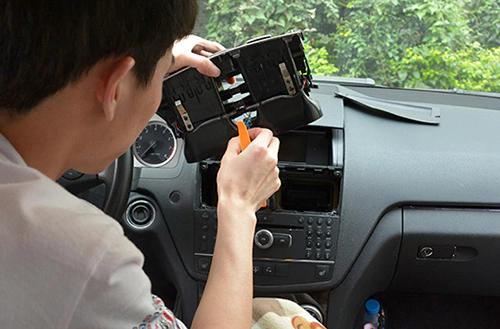
- Disconnect the vehicle battery and remove the factory head unit with the dashboard trim panel. This is the electrical safety step; it is also the point where the original connector type becomes visible.
- Dry fit the model-specific dash kit to check fitment and alignment. Confirm the console opening, mounting points and screen size before any electrical work.
- Identify the connection route. If the vehicle is a non-CAN bus model, the ZYX-02 harness alone completes the electrical layer. If the factory CAN bus must be decoded, the ZYX-03 decoder is added to the harness.
- Plug the wiring harness and, where required, the CAN bus decoder into the original vehicle wiring interface. All connectors must be fully seated before final assembly.
- Connect the new head unit, power on and test all functions. Steering wheel controls, vehicle information display, chime, audio channels and illumination state are the checkpoints that reveal a protocol mismatch immediately.
- Secure the head unit and dash kit, then reinstall the dashboard trim. Confirm CAN decoder model compatibility before power-on, and never pry the trim forcibly.
Use cases: when each part carries the job
Non-CAN bus vehicles and older economy models
This is the harness-only case. The ZYX-02 fits non-CAN bus vehicle models and works with most aftermarket car stereos, so the electrical layer is closed with a single part and no data translation is required. The same logic applies to budget-focused retrofits where the vehicle has no CAN network to preserve.
CAN-equipped vehicles keeping factory functions
This is the harness plus decoder case. Where steering wheel controls, vehicle information display and the original chime must survive the radio swap, the ZYX-03 provides the gateway between the factory CAN bus and the Android head unit. Skipping the decoder here is what produces the dead-button and fault-code symptoms described earlier.
Multi-model workshops, fleets and refurbishment projects
A workshop covering many vehicle applications does not need a different decoder design for every car — it needs the right decoder per application. The ZYX-03 hardware supports both CAN 2.0A and CAN 2.0B at a 500 kbps or 125 kbps dual rate, and firmware is pre-programmed per vehicle model. ZYX maintains a product system covering 3,000+ vehicle applications, so a multi-vehicle project is planned application by application, with the matching harness and, where required, the matching pre-programmed decoder.
Dealership accessory fitting and used-car interior upgrades
Both scenarios value the same property: no damage to the original wiring or interior. The harness installs without cutting original vehicle wiring, the decoder requires no on-site programming, and both parts share a −40°C to 85°C operating range suited to in-vehicle conditions.
Comparison table: ZYX-02 wiring harness vs ZYX-03 CAN bus decoder
| Comparison dimension | ZYX-02 Car Radio Wiring Harness | ZYX-03 CAN Bus Decoder Module |
|---|---|---|
| Role in the retrofit | Electrical connection between OEM wiring and the new head unit | Gateway between the vehicle CAN bus and the aftermarket Android radio |
| Vehicle applicability | Designed for non-CAN bus vehicle models | Vehicle-specific Android head unit retrofit where factory CAN bus signals must be decoded |
| Interface | OEM vehicle-side plug + ISO 16-pin head unit connector | Plug-and-play CAN gateway module, matched to the supplier's harness and dash frame kits |
| Technical basis | 12V DC, 10A maximum current; AWG 20–22 tinned oxygen-free copper; ANSI/CTA-2015-B color-coded insulation | CAN 2.0A / 2.0B, 500 kbps / 125 kbps dual rate; 12V DC, 300 mA standby, 2A maximum |
| Functions supported | Power, ground and speaker signal transfer; compatibility with most aftermarket Android head units and universal car stereos | OEM steering wheel controls, vehicle information display, original chime functions |
| Protection and stability | Reverse polarity protection, short-circuit protection | Built-in CAN isolation intended to prevent dashboard fault codes |
| Materials | Tinned oxygen-free copper, flame-retardant PVC, PA66 housing, tin-plated brass terminals | Flame-retardant ABS housing, tin-plated brass terminals, FR-4 circuit board, heat-conductive silicone potting |
| Operating temperature | −40°C to 85°C | −40°C to 85°C |
| Installation effort | Plug-and-play, no cutting of original vehicle wiring | Plug-and-play, pre-programmed firmware, no on-site debugging or configuration |
| Choose when | The vehicle has no factory CAN bus to translate | Factory CAN bus signals must be decoded to keep OEM controls and displays |
Decision rules before ordering
- Check the network first. If the vehicle has no factory CAN bus, the ZYX-02 harness closes the electrical layer on its own.
- List the functions you must keep. Steering wheel controls, vehicle information display and the original chime are the functions the ZYX-03 is designed to retain.
- Match the firmware, not just the shape. A decoder protocol mismatch or a firmware version that does not match the vehicle trim is a documented cause of dead controls and dashboard fault codes.
- Confirm the connector, not only the model name. Model year, equipment level, original radio, original connector, audio system and new head unit all affect which adapter is correct.
- Decide the compliance path early. Material-level requirements and vehicle EMC requirements apply differently to different parts, so confirm the documentation required for the destination market before the order is fixed.
Where the fascia fits in. The ZYX-01 Car Radio Dash Fascia completes the same stack physically, with model-specific molding, ≤0.2 mm tolerance and a plug-and-play fitment type. Fascia, harness and decoder are three answers to three separate installation questions, which is why ZYX presents them as one product portfolio rather than interchangeable options.
Frequently asked questions
Do CAN bus decoders and car radio wiring harnesses need separate EU compliance checks?
Material compliance and vehicle EMC approval are separate questions. ZYX states that its retrofit kits comply with EU RoHS 2 and REACH regulations on hazardous substance content. For electronic subassemblies integrated into road vehicles in the EU, e/E-Marking under ECE R10 is a separate EMC requirement that applies when the part affects vehicle safety functions, so buyers should confirm which requirement applies to the specific part and destination market before ordering.
Can one ZYX-03 CAN bus decoder serve several vehicle models in the same workshop?
The ZYX-03 hardware supports CAN 2.0A and CAN 2.0B at a 500 kbps or 125 kbps dual rate, but its firmware is pre-programmed per vehicle model. One decoder therefore corresponds to one vehicle application profile rather than to an entire workshop. ZYX maintains a product system covering 3,000+ vehicle applications, so a multi-model project is handled by selecting the matching decoder and harness for each vehicle application instead of relying on a universal unit.
Which is the lower-cost path — harness only, or harness plus decoder?
For a non-CAN bus vehicle, the ZYX-02 harness alone completes the electrical connection, so the decoder is not part of the bill of materials. On a CAN-equipped vehicle, the decoder is an additional part in the same installation, so stocking cost follows the number of vehicle applications covered rather than a single price point. Both routes share the same plug-and-play approach without cutting the original vehicle wiring.
What vehicle information should I send before ordering a sample set?
Provide the vehicle brand, model, model year, original radio, original connector, vehicle configuration and audio system, together with the new head unit type. Clear photos of the original dashboard, the original radio, or the connectors on the back of the original head unit reduce compatibility errors caused by model-year, equipment-level and audio-system differences.
How do I confirm which part my vehicle needs and request a sample or quotation?
Send the vehicle details and connector photos to ZYX, and the application can be matched to the ZYX-02 harness alone or to a harness plus ZYX-03 decoder combination. Shenzhen Zhongyixing Electronic Technology Co., Ltd can be reached by email at yueyongfei7@gmail.com or by phone and WhatsApp on +86 159-2064-3862; the product catalogue is available at www.zyxcaradio.com, and a sample or quotation request can be raised directly from the vehicle information you supply.
Conclusion: it is a layering decision, not a substitution decision
The head-to-head resolves cleanly once the layers are separated. The ZYX-02 car radio wiring harness is the plug-and-play, model-specific adapter built for non-CAN bus vehicle models, joining the OEM vehicle-side plug to an ISO 16-pin head unit connector with 12V DC, 10A maximum current, reverse polarity protection and short-circuit protection. The ZYX-03 CAN bus decoder module is the plug-and-play CAN gateway added when factory CAN bus signals must be decoded, supporting CAN 2.0A and 2.0B at 500 kbps or 125 kbps, with model-specific pre-programmed firmware that retains OEM steering wheel controls, vehicle information display and the original chime while built-in CAN isolation is intended to prevent dashboard fault codes.
Installers who treat these as alternatives end up choosing the wrong layer and then troubleshooting the symptom. Installers who treat them as a stack — physical fascia, electrical harness, data decoder — order once and finish the job. ZYX, operating as Shenzhen Zhongyixing Electronic Technology Co., Ltd, builds all three parts under one product system covering 3,000+ vehicle applications for automotive aftermarket, car audio and navigation upgrade, auto interior modification and cross-border auto parts distribution projects.
Next step: confirm your application before you order
Send the vehicle brand, model, model year, original radio and connector photos, and ZYX will confirm whether the application needs the ZYX-02 harness alone or a harness plus ZYX-03 decoder set. Sample and quotation requests are answered from the same vehicle data.
Email: yueyongfei7@gmail.com | Tel / WhatsApp: +86 159-2064-3862 | Website: www.zyxcaradio.com
Download the company profile brochure: ZYX AUTO Company Profile (PDF)
Have Questions or Need More Details?
Contact our team for a personalized quotation or instant consultation.
Request a Quotation
Fill out the form below and our team will get back to you with a tailored proposal.
WhatsApp Direct Chat
Prefer to chat in real-time? Message us on WhatsApp for instant assistance & quick answers.
- Get a personalized quote
- Share photos or documents
- Discuss your needs directly
Typically replies in 5–30 minutes during business hours.