Why Dashboard Fault Warning Codes Appear After a Car Radio Retrofit Kit Installation
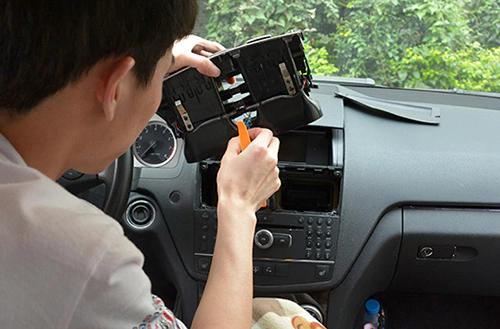
Dashboard fault warning codes after a car radio retrofit kit installation are usually a connection-layer problem, not a head unit defect. Documented troubleshooting cases trace the codes to three causes: an incompatible CAN decoder protocol, a CAN bus interface that is not fully seated, or a decoder firmware version that does not match the vehicle. The corrective sequence is equally specific — confirm the CAN decoder is the model-specific version, re-plug the CAN bus interface so it is fully seated, update the decoder to the latest matching firmware, then clear the vehicle's historical fault codes and retest the system.
That answer holds whether the retrofit was fitted in a workshop or by an owner working from an online guide. What changes between cases is which of the three causes dominates — and that is decided long before the dashboard lights up, at the moment the fascia kit, wiring harness and decoder are specified for a particular vehicle.
Shenzhen Zhongyixing Electronic Technology Co., Ltd — trading as ZYX — is a Shenzhen-based manufacturer of car radio fascia kits, car stereo wiring harnesses and CANBUS decoder solutions for the automotive aftermarket, founded in 2017 and exporting roughly 80% of output to markets including RU and EU. Three ZYX products run through this article: the Car Radio Dash Fascia (ZYX-01), the Car Radio Wiring Harness (ZYX-02) and the CAN Bus Decoder Module (ZYX-03). Together they form the physical, electrical and communication layers that determine whether a retrofit finishes without warning codes.
What a dashboard fault warning code actually means after a retrofit
A dashboard fault warning code is the vehicle reporting a communication problem, not a verdict on the new head unit. The original electronic modules on the vehicle network expect a defined set of messages at a defined rate. When an aftermarket Android head unit and its decoder join that network, any message that stops arriving, arrives late, or arrives in an unexpected format can be logged by another module and surfaced as a dashboard prompt.
The same root failure produces several observable symptoms, and they are worth distinguishing because the fix is different in each case:
- Dashboard fault warning codes — typically an incompatible CAN decoder protocol, a loose CAN bus interface connection, or a mismatched decoder firmware version.
- Steering wheel controls unresponsive — typically a mismatched CAN bus decoder protocol, a loose steering control pin connection, or a decoder that is not programmed for the exact vehicle trim configuration.
- No power at the head unit — typically a disconnected vehicle battery, poor contact of power supply pins, a blown built-in fuse on the harness, or reversed polarity.
- Intermittent signal loss after months of use — typically low-grade copper conductors, thin insulation layers, or the absence of a vibration-resistant crimp design suited to vehicle driving conditions.
Industry background: why connection-layer faults became more visible
The retrofit category sits inside a large and still expanding market. Market Research Future estimated the global car audio head unit market at USD 15.44 billion in 2024. Fortune Business Insights reported that Asia Pacific held a 54.21% share of the global car audio market in 2025. Mordor Intelligence projects a 12.18% CAGR for the car aftermarket audio system market, citing DIY customers and online plug-and-play kits as drivers.
That growth pattern is directly relevant to fault-code frequency. More installations are now completed by end users and general repair shops rather than by dealer technicians with OEM diagnostic equipment, so a mismatch that a dealership would catch during a guided test can reach the dashboard instead. Demand has shifted toward model-specific, plug-and-play formats precisely because they reduce installation risk, but the same format only performs as intended when every layer of the kit is matched to the vehicle.
Two regulatory notes frame the hardware. Under HS Code 8708.99, fascia kits, harnesses and decoder modules are classified as vehicle parts and accessories, per United Nations Statistics Division classification data. In the EU, electronic subassemblies integrated into road vehicles must comply with e/E-Marking (ECE R10) requirements where they affect vehicle safety functions, according to guidance published by testing laboratory Elite Electronic Engineering. For the aftermarket, environmental compliance is a separate layer: full retrofit kits are stated to comply with EU RoHS 2 and REACH regulations, with hazardous substance content controlled across materials and components.
Cause 1 — CAN bus signal decoding mismatch
A CAN bus decoder is an automotive electronic component that enables signal communication between an aftermarket head unit and the vehicle's original CAN bus system. It parses steering wheel control signals, vehicle status data and dashboard prompts from the original bus, converts them into formats the new head unit can read, and forwards control instructions back to the vehicle network. In practice, decoders for Android head units translate vehicle network messages from HEX codes into UART messages, which is how steering wheel controls and vehicle data are retained after the factory radio is removed.
CAN Bus Decoder Module ZYX-03 — documented parameters
- Protocol standard: CAN 2.0A / 2.0B, 500 kbps / 125 kbps dual rate
- Power supply: 12V DC, 300 mA standby, 2 A maximum
- Operating temperature: -40°C to 85°C
- Housing: flame-retardant ABS plastic; terminals: tin-plated brass; circuit board: FR-4 glass fiber epoxy resin; internal potting: heat-conductive silicone
- Type: plug-and-play CAN gateway module
Decoding failures appear when any one of three conditions is present. The first is a protocol mismatch: the decoder is built for a different bus configuration than the one the vehicle actually runs. The second is a rate or message-set mismatch: the decoder talks to the bus, but not with the message set the other modules expect. The third is a firmware mismatch: the hardware is correct but the decoder carries a firmware release that belongs to another model year or equipment level.
The reason this happens so often is that a single vehicle nameplate is not a single electronic specification. The same model may use different original equipment across model years and trim levels, and the ZYX compatibility method treats model year, original radio, original connector, vehicle configuration and audio system as separate variables for exactly that reason. A decoder that is only "for vehicle X" is not the same product as a decoder that is "for vehicle X, model year Y, trim Z".
Cause 2 — wiring harness adaptation
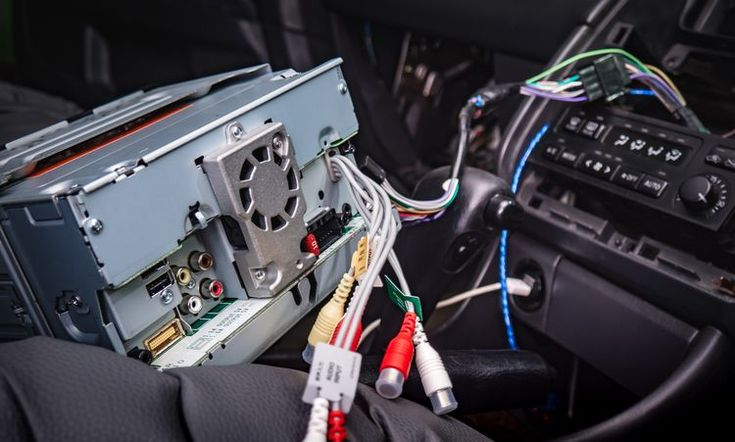
Wiring harness adaptation is the second failure point, and it is the one most often mis-diagnosed as a decoder fault. The Car Radio Wiring Harness ZYX-02 uses an OEM vehicle-side plug plus an ISO 16-pin head unit connector, AWG 20-22 tinned oxygen-free copper conductors with ANSI/CTA-2015-B colour-coded insulation, a 12V DC / 10 A maximum current rating, and an operating range of -40°C to 85°C. Protection features include reverse polarity protection and short-circuit protection. Materials: tinned oxygen-free copper conductor, flame-retardant PVC insulation, PA66 engineering plastic connector housing, tin-plated brass contact terminals. The harness is specified for non-CAN bus vehicle models and works with most aftermarket car stereos; on CAN-equipped vehicles the connection layer pairs a harness adapter with a CAN bus decoder such as ZYX-03.
Three adaptation problems produce fault codes or fault-like behaviour:
- Pin definition mismatch. The connector physically fits but the pin assignment belongs to a different original radio or configuration. Power and speaker functions may work while a steering control or data line sits on the wrong cavity.
- Incomplete seating. A connector that is inserted but not latched can pass a static test and fail under road vibration, which is why loose CAN bus interface connections appear in the documented cause list alongside protocol mismatch.
- Reversed polarity or wrong pin assignment during cut-wire work. This is the documented route to short circuits, head unit burnout and damage to the original electrical system — risks that a plug-and-play harness with built-in reverse polarity protection is designed to avoid.
Material quality decides whether the fault appears on day one or in year three. Intermittent signal loss and functional failure after long-term use are usually caused by low-grade copper conductors, thin insulation layers, and the absence of a vibration-resistant crimp design adapted to vehicle driving conditions. Tinned oxygen-free copper conductors, reinforced crimp terminals and flame-retardant insulation are the countermeasures, combined with a line inspection during routine vehicle maintenance.
Cause 3 — head unit to vehicle model compatibility
Compatibility is a chain, not a checkbox. ZYX evaluates product compatibility through a fixed sequence: vehicle brand, vehicle model, model year, original radio, original connector, vehicle configuration, audio system, then new head unit. A break anywhere in that sequence can surface as a dashboard prompt even when the decoder and harness are individually correct.
Two breaks are common in real projects. The first is configuration drift: the same model year ships with different original radio and audio system specifications depending on trim and market, so a kit validated on one configuration may not match another. The second is information loss in ordering: the buyer supplies a model name but not the original dashboard, radio or connector variant, and the supplier can only match at nameplate level.
ZYX's product system covers more than 3,000 vehicle applications across brands including Toyota, Honda, Nissan, Mazda, Ford, Chevrolet, Volkswagen, Audi, BMW, Mercedes-Benz, Hyundai, Kia, Jeep, Dodge, Mitsubishi, Subaru, Peugeot, Renault, Citroën and Fiat. Coverage at that scale is only useful if the specific application is identified precisely, which is why the manufacturer recommends that customers provide clear photos of the original dashboard, the original radio, or the connectors on the back of the original head unit before ordering.
Step-by-step: diagnosing and clearing the code
The following sequence follows the documented troubleshooting path and the documented installation safety notes. Work in this order — clearing codes before correcting the cause will simply reproduce them.
- Disconnect the vehicle battery. This is the first safety step in every retrofit, and it prevents short circuits while connectors are handled.
- Read and record the stored fault codes and freeze-frame data before clearing anything. Note which module raised the code and when it set — at key-on, at cranking, or after a driving cycle.
- Confirm the CAN decoder is the model-specific version for this vehicle. Check part number against model, model year and trim configuration, not against the marketing name of the vehicle.
- Re-plug the CAN bus interface and confirm it is fully seated. Do the same for the steering control connectors if wheel buttons are affected.
- Verify the harness. Compare pin definition and connector cavities against the original radio, confirm polarity, inspect the built-in fuse on the harness, and check circuit continuity before powering on.
- Update the decoder to the latest matching firmware if the hardware is correct but the release does not correspond to the vehicle version; reflash the matching firmware where required.
- Clear the vehicle's historical fault codes and retest. Reconnect the battery, run a full function test — steering wheel controls, original vehicle information, key control, ACC signal — then re-read the system to confirm no codes return.
Preventing the codes at specification and order stage
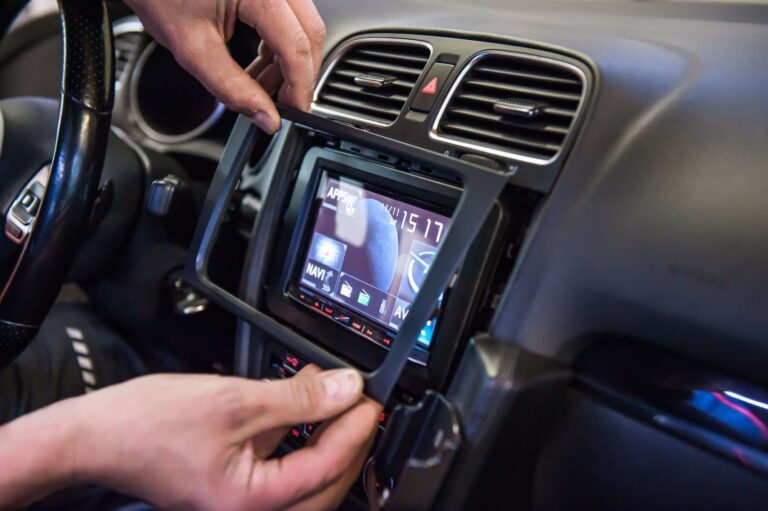
Most dashboard fault codes are decided in the quotation, not in the bay. For installers, distributors and brand owners building a vehicle-specific Android car stereo fascia kit programme, the controllable variables are:
- Vehicle data completeness. Brand, model, model year, original radio, original connector, configuration and audio system, supported by photos of the dashboard and original connectors.
- Kit configuration. Kit combination configuration is a documented customization area, so fascia, harness and decoder are specified as one matched set rather than assembled from unrelated parts.
- Harness definition. Wiring harness pin definition and length can be customized, which matters where the original connector layout differs between trims.
- Physical fit. Dash kit model and surface finish are customizable; the ZYX-01 fascia family covers 7", 9", 10.1" and 12.3" screens with Double-DIN or model-specific custom mounting, dimensional tolerance ≤0.2 mm, material thickness 2.5–3.0 mm, ABS construction and a -40°C to 85°C operating range.
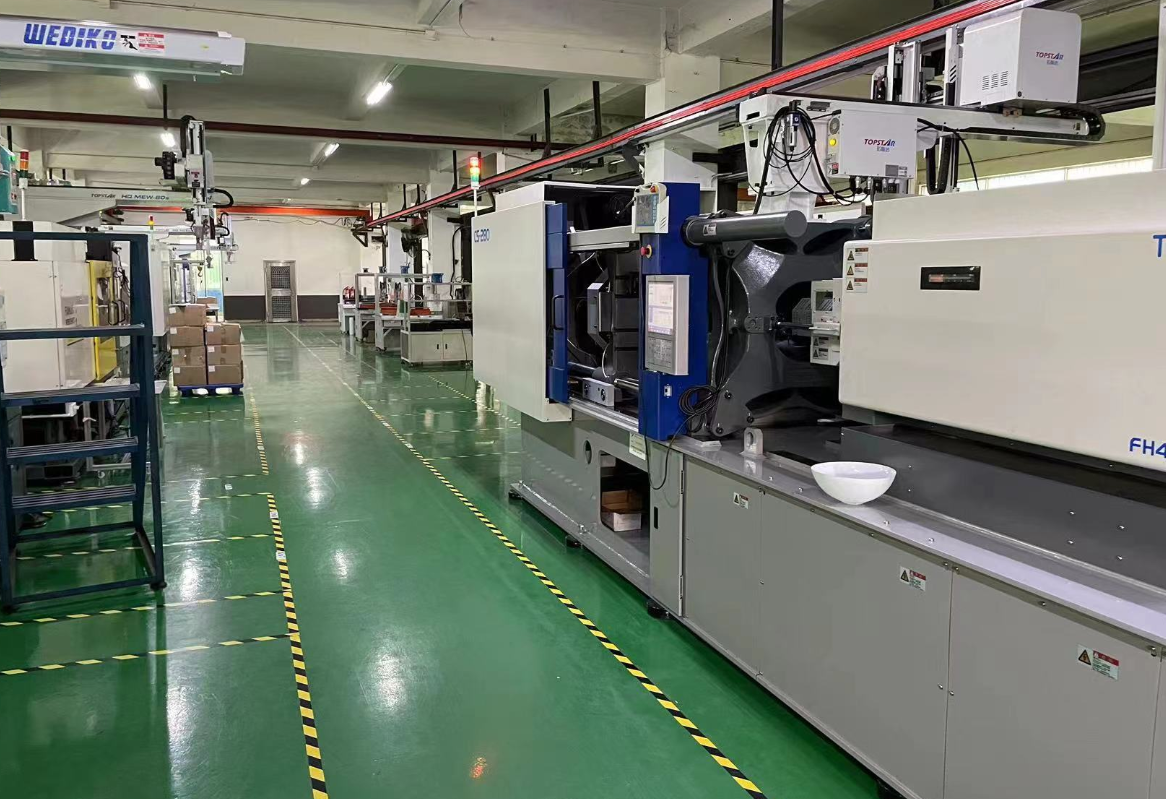
- Pre-shipment verification. ZYX runs 100% incoming inspection for CAN bus decoders and 100% pre-shipment conductivity and fit testing, with third-party inspection such as SGS accepted on bulk programmes.
- After-sales support. A 12-month product warranty, remote installation technical guidance, free replacement for defective items and professional CAN protocol matching support are the documented support terms.
- Supply capability. Monthly capacity is 12,000 units across fascia kit, wiring harness and CAN bus decoder programmes; stock products ship in 3–7 days and custom model-specific products in 15–25 days.
Use cases: where fault-code risk concentrates
Multi-vehicle retrofit shops. A shop that fits several brands per week cannot hold OEM diagnostic tools for every marque, so it depends on the kit being matched at order stage. A mis-specified decoder becomes a return visit rather than a parts swap.
Fleet and dealership programmes. Fleet audio upgrades and dealership pre-delivery fitting place a premium on zero-damage installation and stable behaviour, because a warning light on a delivered vehicle creates a warranty conversation. Plug-and-play, model-specific kits are recommended for these scenarios, as well as for premium vehicle upgrades, because they avoid damage to original wiring, deliver precise fitment and stable CAN protocol matching.
Distributor and brand-owner programmes. Volume buyers carry the fault-code risk in their own return rates. Two documented ZYX cases illustrate the pattern: an after-market solution integrator in China has taken a cumulative 19,000+ sets of dash frames, wiring harnesses and CAN bus decoders for various car brands over a 7-year cooperation, with a return rate below 0.8%, and a car multimedia brand owner has taken a cumulative 550,000+ sets over 9 years of continuous cooperation with a return rate below 0.7%, citing protocol compatibility, stable mass production and support for multi-country compliance standards.

Comparison: symptom, cause and corrective action
| Observed symptom | Documented cause | Corrective action |
|---|---|---|
| Dashboard fault warning codes after retrofit | Incompatible CAN decoder protocol, loose CAN bus interface connection, mismatched decoder firmware version | Confirm model-specific decoder; re-plug CAN interface until fully seated; update to matching firmware; clear historical codes and retest |
| Steering wheel controls unresponsive | Mismatched CAN bus decoder protocol, loose steering control pin connection, decoder not programmed for the exact trim | Verify decoder against model, model year and trim; re-plug CAN and steering connectors; reflash matching firmware if required |
| Head unit will not power on | Disconnected battery, poor contact of power supply pins, blown built-in fuse on the harness, reversed polarity | Check battery connection; re-plug power connector; inspect harness fuse; confirm power interface polarity |
| Intermittent signal loss after long-term use | Low-grade copper conductors, thin insulation, no vibration-resistant crimp design | Specify tinned oxygen-free copper conductors, reinforced crimp terminals and flame-retardant insulation; inspect wiring at routine maintenance |
Comparison: plug-and-play model-specific kit vs cut-wire universal solution
| Criterion | Plug-and-play model-specific kit (ZYX-01 + ZYX-02 + ZYX-03) | Traditional cut-wire universal CAN solution |
|---|---|---|
| Original vehicle wiring | No cutting or modification; uses the factory original electrical interface | Original wiring is cut and spliced |
| Fit accuracy | Model-specific moulding, dimensional tolerance ≤0.2 mm on the fascia | Poorer fit accuracy |
| CAN protocol matching | Pre-programmed, vehicle-specific CAN firmware | Universal decoder without model-specific firmware |
| Dashboard fault risk | Pre-flashed vehicle-specific firmware eliminates dashboard fault codes when the configuration is confirmed | Higher fault incidence; documented trigger for fault codes and lost steering controls |
| Upfront cost | Higher upfront cost | Lower upfront cost |
| Recommended scenario | Premium vehicle upgrades, fleet batch modification, dealership pre-delivery fitting | Low-budget simple retrofits of older economy vehicles |
Frequently asked questions
Will installing an aftermarket Android head unit damage the original vehicle wiring or electrical system?
Short circuits, head unit burnout and damage to the original electrical system are typically caused by cut-wire universal wiring harnesses, reversed polarity, or wrong pin assignments during unprofessional installation. A plug-and-play harness with built-in reverse polarity protection and short-circuit protection — such as ZYX-02, rated 12V DC with 10 A maximum current — reduces that risk because it connects through the OEM vehicle-side plug and an ISO 16-pin head unit connector without cutting the original wiring. Verify circuit continuity before powering on, disconnect the battery during installation, and follow the official installation guide. On environmental compliance, the full retrofit kit is stated to meet EU RoHS 2 and REACH requirements, and electronic subassemblies fitted to road vehicles in the EU must meet e/E-Marking (ECE R10) requirements where they affect vehicle safety functions.
Can a mismatched CAN bus decoder cause dashboard fault codes, and how do I select the right one?
Yes. A universal decoder without model-specific firmware is a documented trigger for dashboard fault codes and for steering wheel controls that stop working. Select a decoder matched to vehicle model, model year and trim configuration, not just to the vehicle name. The CAN Bus Decoder Module ZYX-03 runs CAN 2.0A / 2.0B at 500 kbps / 125 kbps dual rate, draws 12V DC with 300 mA standby and 2 A maximum, and operates from -40°C to 85°C. Confirm the exact configuration before ordering and run a compatibility test before final assembly.
Do you offer OEM/ODM customization for a vehicle-specific Android car stereo fascia kit programme?
Yes. ZYX provides OEM, ODM, kit assembly and authorized distribution production services. Customization and technical services cover dash kit model and surface finish, wiring harness pin definition and length, and kit combination configuration. OEM production is available for vehicle-specific Android car stereo fascia kits, wiring harnesses and CAN bus decoders. The factory covers 5,000 m² with a monthly capacity of 12,000 units and a 3-engineer R&D team, and runs 100% incoming inspection for CAN bus decoders plus 100% pre-shipment conductivity and fit testing.
What is the MOQ, and which commercial terms apply?
The minimum order quantity is 1 unit for stock items and 100 units for custom OEM/ODM items. Bulk purchase documentation lists FOB Shenzhen, CIF Hamburg and EXW factory delivery terms, with 30% T/T in advance and 70% T/T against copy of a B/L. Pre-shipment function and fitment testing is standard, and third-party inspection such as SGS is accepted. Single-set orders can also ship by international express with inspection on delivery and a 7-day return and exchange policy for quality defects, paid by credit card, PayPal or platform secured payment.
How fast can samples and bulk orders ship?
Stock products ship in 3–7 days; custom model-specific products take 15–25 days, against a monthly production capacity of 12,000 units. A sample order from 1 unit lets an installer verify fitment and CAN behaviour on the actual vehicle before committing to a bulk programme — the cheapest possible test for a fault-code risk that would otherwise surface on the dashboard. To check a specific vehicle application or request a sample, contact the ZYX team directly.
Conclusion
Dashboard fault warning codes after a car radio retrofit are a diagnostic signal about the connection layer, and they resolve in a predictable order: verify the decoder is model-specific, re-seat the CAN bus interface, correct any harness pin or polarity deviation, update the decoder firmware, then clear the stored codes and retest. Nothing in that sequence requires replacing the head unit first.
The durable fix is upstream. A vehicle-specific Android car stereo fascia kit performs as a system when the fascia is moulded to the actual dashboard, the harness matches the original connector and pin definition, and the decoder carries firmware for that model year and trim. Where any of the three is specified at nameplate level only, the dashboard becomes the place where the mismatch is discovered.
Check your application before the dashboard does
Send the vehicle brand, model, model year, original radio and connector photos, and the ZYX team will confirm the matching fascia, harness and CAN bus decoder set. Stock items start from 1 unit; custom OEM/ODM programmes start from 100 units.
Company profile and full product catalogue: ZYX AUTO Company Profile Brochure (PDF)
Website: www.zyxcaradio.com | Email: yueyongfei7@gmail.com | Tel / WhatsApp: +86 159-2064-3862
Shenzhen Zhongyixing Electronic Technology Co., Ltd, 5th Floor, Building D, Tianxi Sheng, No.46 Hongyin Road, Loucun Community, Xinhu Street, Guangming District, Shenzhen, China.
Have Questions or Need More Details?
Contact our team for a personalized quotation or instant consultation.
Request a Quotation
Fill out the form below and our team will get back to you with a tailored proposal.
WhatsApp Direct Chat
Prefer to chat in real-time? Message us on WhatsApp for instant assistance & quick answers.
- Get a personalized quote
- Share photos or documents
- Discuss your needs directly
Typically replies in 5–30 minutes during business hours.