The Hidden Firmware Layer in Vehicle-Specific Android Car Stereo Fascia Kits
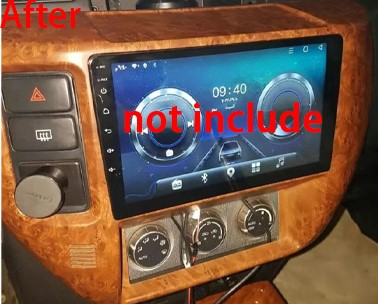
A vehicle-specific Android car stereo fascia kit is normally specified by two visible parts: the dash fascia that closes the aperture and the wiring harness that carries power and speakers. In kits built for CAN-equipped vehicles there is a third part that never appears in the box photo — a CAN bus decoder module carrying model-specific firmware. That firmware, not the plastic or the copper, decides whether the retrofit ends with working steering wheel buttons and a silent dashboard, or with fault codes the installer has to explain to the customer.
Why the Third Layer Gets Missed in Procurement
ZYX Car Radio Fascia Kit is the fascia, harness and decoder product line of Shenzhen Zhongyixing Electronic Technology Co., Ltd, a Shenzhen-based supplier of car stereo installation accessories founded in 2017, with 80% of output exported and Russia and the EU as main markets. Within that line the three parts are not interchangeable accessories supplied together for convenience; each one answers a different failure mode, and only one of them is a firmware problem.
Buyers comparing quotations tend to line up the first two layers — fascia size, harness connector, material, price per set — because both can be inspected on a bench. The decoder is harder to compare, so it is treated as a bundled extra. That is the sourcing error this article addresses: on a CAN-equipped vehicle, the decoder is the only part of the kit whose behaviour cannot be judged by looking at it.
Problem Definition: Three Layers, Three Different Failure Modes
A retrofit fails in one of three places. Splitting the kit into layers makes the failure modes comparable and shows where a specification actually needs to be written down.
Layer 1 — Geometry: ZYX-01 Car Radio Dash Fascia
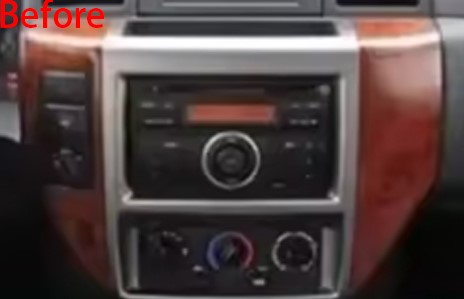
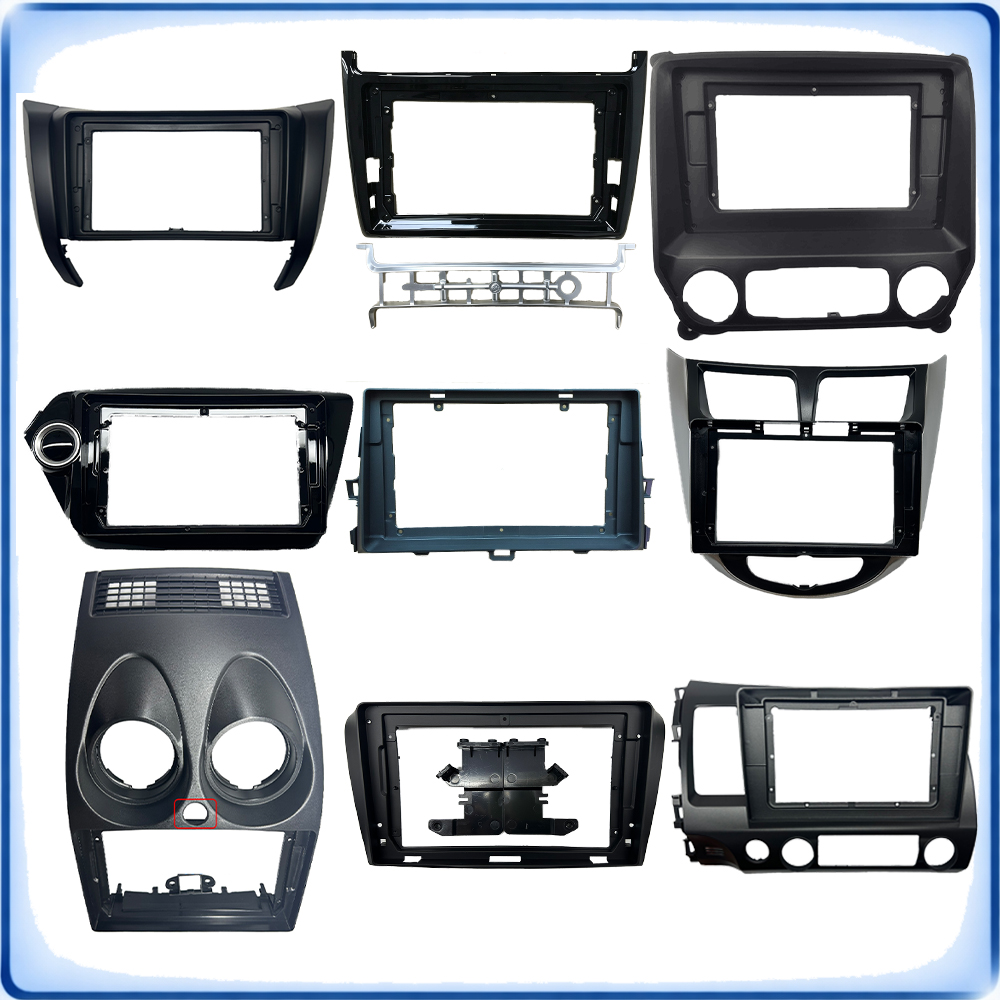
The dash fascia solves physical installation. The ZYX-01 is produced from original vehicle dashboard data in ABS with a material thickness of 2.5 mm to 3.0 mm and a dimensional tolerance of ≤0.2 mm. Compatible screen sizes are 7 inches, 9 inches, 10.1 inches and 12.3 inches, with a double-DIN or model-specific custom mounting standard, plug-and-play fitment and an operating temperature range of -40°C to 85°C. When this layer is wrong, the symptom is visible: gaps, misalignment and a risk of marking the original interior trim.
Layer 2 — Electrical Continuity: ZYX-02 Car Radio Wiring Harness
The harness solves connection. The ZYX-02 uses an OEM vehicle-side plug plus an ISO 16-pin head unit connector. Conductors are AWG 20-22 tinned oxygen-free copper with ANSI/CTA-2015-B colour-coded insulation; the connector housing is PA66 engineering plastic and the contact terminals are tin-plated brass. The rated voltage is 12V DC with a maximum current of 10A, the operating range is -40°C to 85°C, and the harness includes reverse polarity protection and short-circuit protection. Its stated compatibility is non-CAN bus vehicle models, working with most aftermarket car stereos and Android head units through plug-and-play installation without cutting the original wiring.
Layer 3 — Protocol: ZYX-03 CAN Bus Decoder Module
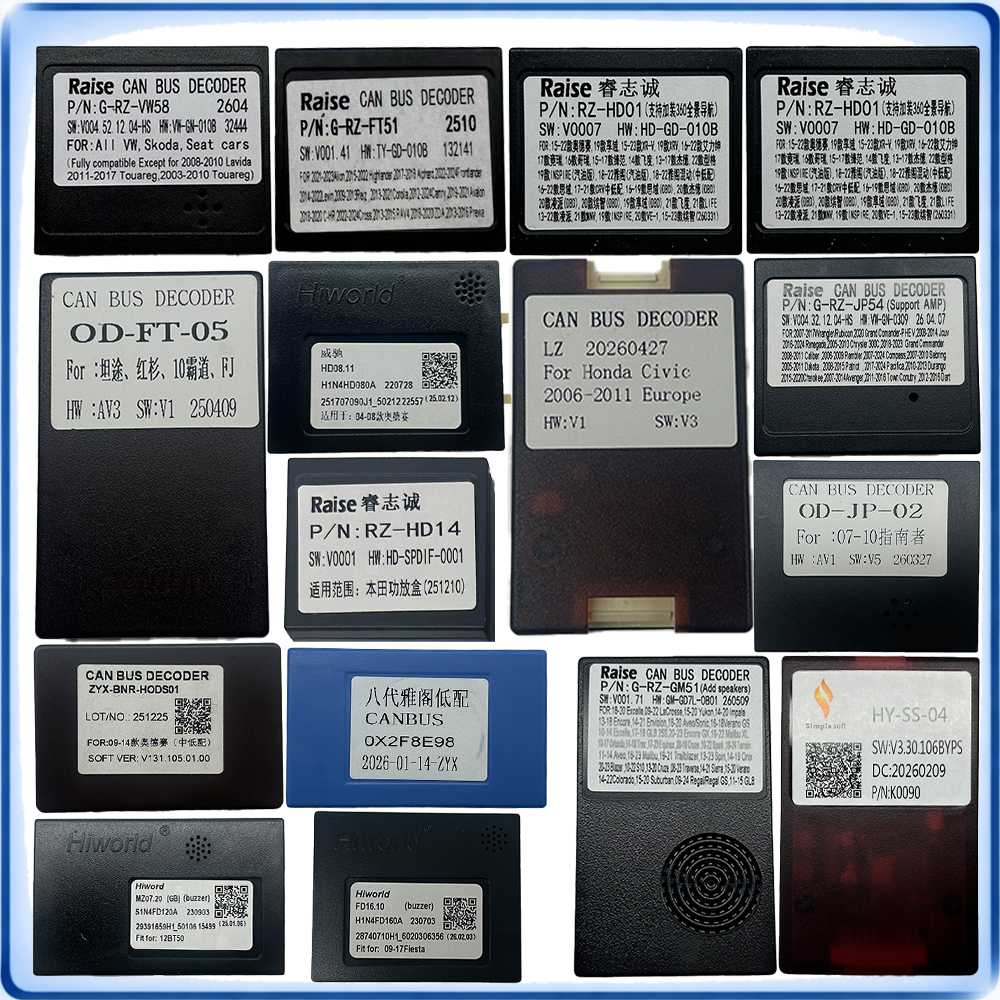
The decoder solves communication. It is a plug-and-play CAN gateway module that sits between the vehicle CAN bus and the aftermarket Android stereo, supplied pre-programmed with model-specific firmware so that installation needs no on-site configuration or debugging. Where the harness delivers power and audio, this layer delivers the messages: steering wheel control commands, vehicle information display and the original chime.
Industry Background: Why Protocol Compatibility Became a Spec Line
Three pressures pushed the decoder out of the accessory drawer and into the specification.
Volume and channel shift. The global car audio head unit market was estimated at USD 15.44 billion in 2024 (Market Research Future). The car aftermarket audio system market is projected to grow at a CAGR of 12.18%, with DIY customers and online plug-and-play kits named as drivers (Mordor Intelligence). Asia Pacific held a 54.21% share of the global car audio market in 2025 (Fortune Business Insights). As more buyers self-install rather than hand the car to a workshop, the tolerance for a decoder that needs bench configuration drops to zero — which is exactly what pre-programmed firmware is designed to remove.
Technical clarity. Published technical explanations of this category describe CANBUS decoders for Android head units as translating vehicle network messages from HEX codes into UART messages so the head unit can retain steering wheel controls and climate data (Quality Mobile Video). Once the mechanism is stated that plainly, the buying question stops being whether a decoder is included and becomes which firmware version it carries.
Compliance. Electronic subassemblies integrated into road vehicles in the EU must comply with e/E-Marking (EMC testing under ECE R10) rather than CE marking alone where they impact vehicle safety functions (Elite Electronic Engineering). For trade classification, HS code 8708.99 covers vehicle parts and accessories not elsewhere specified (United Nations Statistics Division). ZYX states that its retrofit kit materials comply with EU RoHS 2 and REACH regulations. Buyers should still confirm the applicable E-mark scope for their own market entry rather than assuming a single certificate covers every configuration.
What the ZYX-03 Module Actually Does — Verified Parameters
The ZYX-03 is specified as a plug-and-play CAN gateway module. Its published parameters are narrow enough to be checked against a vehicle record before an order is placed:
- Protocol standard: CAN 2.0A / CAN 2.0B.
- Data rate: dual rate, 500 kbps and 125 kbps.
- Power supply: 12V DC, 300 mA in standby, 2 A maximum.
- Operating temperature: -40°C to 85°C.
- Housing: flame-retardant ABS plastic.
- Connector terminals: tin-plated brass.
- Circuit board: FR-4 glass fibre epoxy resin.
- Internal potting: heat-conductive silicone.
The functional claims attached to the module are specific and testable at the vehicle: it is designed to retain OEM steering wheel control functions when used with an aftermarket Android head unit, it retains vehicle information display and original chime functions after installation, and it includes built-in CAN isolation intended to prevent dashboard fault codes. The firmware is sourced from professional automotive CAN protocol manufacturers with official authentic firmware and is pre-programmed per vehicle model, and every decoder is subject to 100% incoming quality inspection.
How Model-Specific Firmware Is Pre-Programmed
Firmware in this context is not a generic driver. It is a stored model record: the module has to know what the vehicle sends before it can forward anything to the head unit. ZYX builds that record from a matching chain applied to each application — vehicle brand, vehicle model, model year, original radio, original connector, vehicle configuration, audio system, then the new head unit. The decoder is flashed against that record before shipment.
Two consequences follow from that sequence, and both matter commercially.
First, the trim level is part of the part number. The same model name can carry different original equipment configurations, so a decoder that is correct for one trim can be wrong for another. This is why ZYX asks customers for clear photographs of the original dashboard, the original radio, or the connectors on the back of the original head unit when a model has multiple configurations. Photographs are cheaper than a returned set.
Second, a data-rate mismatch is a specification question, not an installation question. The module is documented as operating at 500 kbps and 125 kbps. Buyers should have the supplier confirm which rate configuration applies to the specific vehicle record on the order, rather than discovering it during a test drive.
Why Dashboard Fault Warning Codes Appear When Protocol Compatibility Is Missing
Dashboard fault warning codes appearing after a retrofit are attributed to three causes in the technical documentation for this product category: an incompatible CAN decoder protocol, a loose CAN bus interface connection, or a mismatched decoder firmware version. Steering wheel control buttons failing to respond are attributed to a mismatched CAN bus decoder protocol, a loose steering wheel control pin connection, or a decoder that is not programmed for the exact vehicle trim configuration.
Neither symptom is an audio problem. Both are protocol problems surfacing through the vehicle rather than through the head unit, which is why they are frequently misdiagnosed as a faulty stereo or a faulty harness. The documented resolution path is the same in both cases: confirm the decoder is the model-specific version for the vehicle, reseat the CAN bus interface, update to the matching firmware, clear the vehicle historical fault codes and retest.
| Symptom after retrofit | Documented cause | Documented corrective action |
|---|---|---|
| Dashboard fault warning codes | Incompatible CAN decoder protocol; loose CAN bus interface connection; mismatched decoder firmware version | Confirm model-specific decoder; reseat CAN bus interface; update decoder to matching firmware; clear historical fault codes and retest |
| Steering wheel control buttons unresponsive | Mismatched CAN bus decoder protocol; loose steering control pin connection; decoder not programmed for the exact trim | Verify decoder matches model, model year and trim; re-plug CAN bus and steering control connectors; confirm and reflash the matching firmware |
| Head unit will not power on | Disconnected battery; poor contact of power supply pins; blown fuse on the harness; reversed polarity | Check battery connection; re-plug the power connector; inspect the harness fuse; confirm power interface polarity |
Step-by-Step Breakdown: Verifying the Firmware Layer in a Retrofit
The sequence below is the one the product documentation supports, adapted for a buyer or installer who wants the decoder checked before the dashboard goes back together.
- Build the vehicle record before quoting. Record brand, model, model year, original radio, original connector, trim configuration, audio system and the new head unit. A decoder order without this record is a guess.
- Decide whether the vehicle is CAN-equipped at all. If it is not, no decoder is required and the ZYX-02 harness is the correct layer — it is documented for non-CAN bus vehicle models. Adding a decoder to a non-CAN car adds cost without adding function.
- Match the firmware version to the record. Confirm the pre-programmed model-specific firmware corresponds to the exact vehicle record, not to a neighbouring model year.
- Dry fit the fascia before any electrical work. Check alignment of the ZYX-01 to the ≤0.2 mm tolerance expectation and confirm the screen size (7, 9, 10.1 or 12.3 inches) matches the head unit.
- Disconnect the vehicle battery. The documented safety note is unambiguous: disconnect the battery before installation to avoid electrical short circuits, and never pry the dashboard trim forcibly.
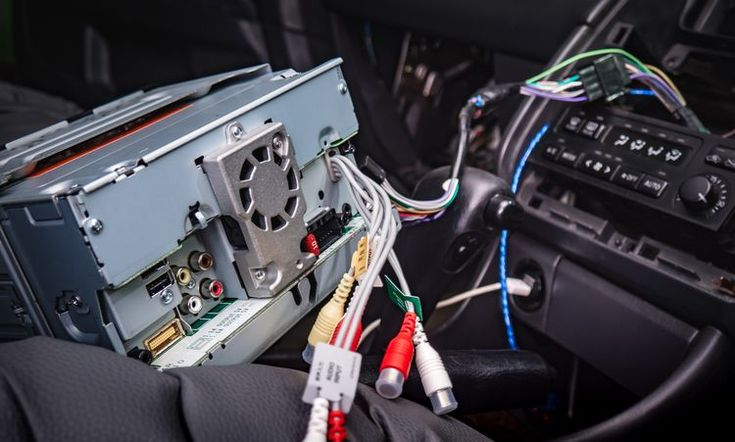
- Connect in order. OEM vehicle-side plug to the harness, harness to the ISO 16-pin head unit connector, decoder in the chain as the gateway between the vehicle CAN bus and the Android stereo. Confirm every connector is fully seated before final assembly — a partially seated CAN interface is a listed cause of fault codes.
- Power on and test the functions that belong to the protocol layer. Steering wheel controls, vehicle information display and the original chime are the three claims to verify, in that order.
- If codes appear, work the documented path. Reseat, reflash to the matching firmware, clear historical codes, retest. If the fault persists, the vehicle record is wrong — return to step 1 rather than replacing the harness.
Use Cases: Where the Firmware Layer Changes the Purchase Decision
Multi-brand installation shops. A workshop fitting several brands per month carries decoder variants, not decoders. The cost of a wrong variant is a second visit and a customer who no longer trusts the plug-and-play claim, which is why the vehicle record should be captured at booking rather than at the bay.
Distributors and importers. Stock decisions are driven by how many vehicle applications a decoder range covers. ZYX states that its product and vehicle compatibility system covers 3,000+ vehicle applications, and that coverage is expanded as new models enter markets. For an importer, the practical question is which applications in that database are also in local demand.
Brand owners and OEM buyers. Customisation at ZYX covers dash kit model and surface finish, wiring harness pin definition and length, and kit combination configuration, with a minimum order of 100 units for custom OEM/ODM items and 15 to 25 days lead time. Custom pin definitions are the point where firmware and harness must be specified together rather than sequentially.
Used-car refurbishment and fleet fitting. Repeatable function retention matters more than appearance. Long-run supply data supports the point: an after-market solution integrator has taken a cumulative 19,000+ sets over seven years of cooperation with a return rate below 0.8%, and a car multimedia brand owner has taken a cumulative 550,000+ sets over nine years with a return rate below 0.7%. In both cases the recorded strengths are protocol compatibility and stable mass production rather than price.
Comparison Table: The Three Layers of a Vehicle-Specific Kit
| Part | Model | Function in the kit | Verified parameters | Boundary to check before ordering |
|---|---|---|---|---|
| Car Radio Dash Fascia | ZYX-01 | Physical mounting and interior finish | ABS; 2.5-3.0 mm thickness; ≤0.2 mm tolerance; 7/9/10.1/12.3 inch screen sizes; double-DIN or model-specific custom; plug-and-play; -40°C to 85°C | Dashboard structure of the specific model and the head unit screen size |
| Car Radio Wiring Harness | ZYX-02 | Power, speaker and connector continuity | OEM vehicle-side plug + ISO 16-pin head unit connector; AWG 20-22 tinned oxygen-free copper; ANSI/CTA-2015-B colour coding; 12V DC, 10A maximum; reverse polarity and short-circuit protection; -40°C to 85°C | Documented for non-CAN bus vehicle models; not a substitute for a decoder on a CAN-equipped vehicle |
| CAN Bus Decoder Module | ZYX-03 | Protocol translation between the vehicle network and the Android head unit | CAN 2.0A / 2.0B; 500 kbps and 125 kbps dual rate; 12V DC, 300 mA standby, 2 A maximum; -40°C to 85°C; flame-retardant ABS housing; FR-4 board; pre-programmed model-specific firmware | CAN-equipped vehicle only; firmware must match model, model year and trim |
FAQ
What compliance points should a buyer confirm for a fascia kit sold into the EU?
For the kit materials, ZYX states compliance with EU RoHS 2 and REACH regulations. For the electronic element, published guidance indicates that electronic subassemblies integrated into road vehicles in the EU must comply with e/E-Marking (EMC testing under ECE R10) rather than CE marking alone where they impact vehicle safety functions, so the applicable scope should be confirmed for the specific configuration and market. For customs, HS code 8708.99 is the classification used for vehicle parts and accessories not elsewhere specified. Buyers should treat these as three separate confirmations, not one document.
Can one pre-programmed decoder cover several vehicle models or model years?
No. The ZYX-03 is pre-programmed with model-specific firmware per vehicle model so that installation is plug-and-play without on-site debugging, and the matching record runs through brand, model, model year, original radio, original connector, configuration and audio system. A mismatched decoder firmware version is one of the documented causes of dashboard fault warning codes, and a decoder not programmed for the exact trim is a documented cause of unresponsive steering wheel controls. Where a model has multiple original equipment configurations, photographs of the original dashboard, radio or connectors are used to confirm the correct variant.
What drives the cost difference between a fascia-only kit and a kit that includes the decoder?
The difference comes from structure rather than from a single component price: each vehicle application requires its own firmware variant and its own place in the compatibility record, and every decoder receives 100% incoming quality inspection, on top of a 100% pre-shipment conductivity and fit test for the kit. Order structure also changes the commercial picture — stock items are available from 1 unit with a 3 to 7 day lead time, while custom OEM/ODM items start at 100 units with a 15 to 25 day lead time. Buyers should compare quotations on the number of firmware variants supplied, not on the kit line alone.
Can I validate firmware compatibility on a sample before a bulk order?
Yes. Stock items are available from a single unit with a 3 to 7 day lead time, which allows a sample set to be tested against a specific vehicle. The supported validation sequence is a dry fit of the fascia, then connection of the harness and decoder to the original vehicle interface, then a function test of steering wheel controls, vehicle information display and the original chime before final assembly. The battery must be disconnected before installation, and the decoder model compatibility should be confirmed before power-on. Products carry a 12-month warranty with remote installation technical guidance and free replacement for defective items.
What lead times apply to model-specific decoder kits, and how do I start?
Stock products ship in 3 to 7 days; custom model-specific products take 15 to 25 days against a monthly capacity of 12,000 units. The fastest way to start is to send the vehicle record — brand, model, model year, original radio, connector photographs, trim configuration and the intended head unit — so the correct firmware variant can be confirmed before a sample set is released. ZYX Car Radio Fascia Kit supplies fascia, harness and decoder as a matched set, and the full company profile can be downloaded for reference.
Conclusion: Specify the Firmware, Not Just the Fitting
A vehicle-specific Android car stereo fascia kit is a three-layer product. Geometry is specified by tolerance and screen size; electrical continuity is specified by connector type, conductor and protection; protocol is specified by firmware identity. Only the third layer has to match a vehicle down to the trim level, and only the third layer produces symptoms — dashboard fault codes, dead steering wheel buttons — that look like installation errors but are actually specification errors.
The practical rule for buyers is simple. Write the vehicle record into the purchase order, confirm the decoder is pre-programmed for that record, confirm the data rate configuration, and keep the ZYX-02 harness for the non-CAN applications where it belongs. Everything else in the kit can be inspected on a bench; the firmware cannot, so it should be the first line verified and the last item negotiated.
Check the firmware variant before you order
Send the vehicle model, model year, original radio and connector photographs, and ZYX Car Radio Fascia Kit will confirm the matching ZYX-03 decoder variant together with the correct ZYX-01 fascia and ZYX-02 harness combination. Sample sets are available from a single unit.
Website: www.zyxcaradio.com | Email: yueyongfei7@gmail.com | WhatsApp: +86 159-2064-3862
Company profile brochure (download): ZYX Auto Company Profile
Have Questions or Need More Details?
Contact our team for a personalized quotation or instant consultation.
Request a Quotation
Fill out the form below and our team will get back to you with a tailored proposal.
WhatsApp Direct Chat
Prefer to chat in real-time? Message us on WhatsApp for instant assistance & quick answers.
- Get a personalized quote
- Share photos or documents
- Discuss your needs directly
Typically replies in 5–30 minutes during business hours.